About Dr. Alison Bays
The board-certified academic rheumatologist behind Rheumify.
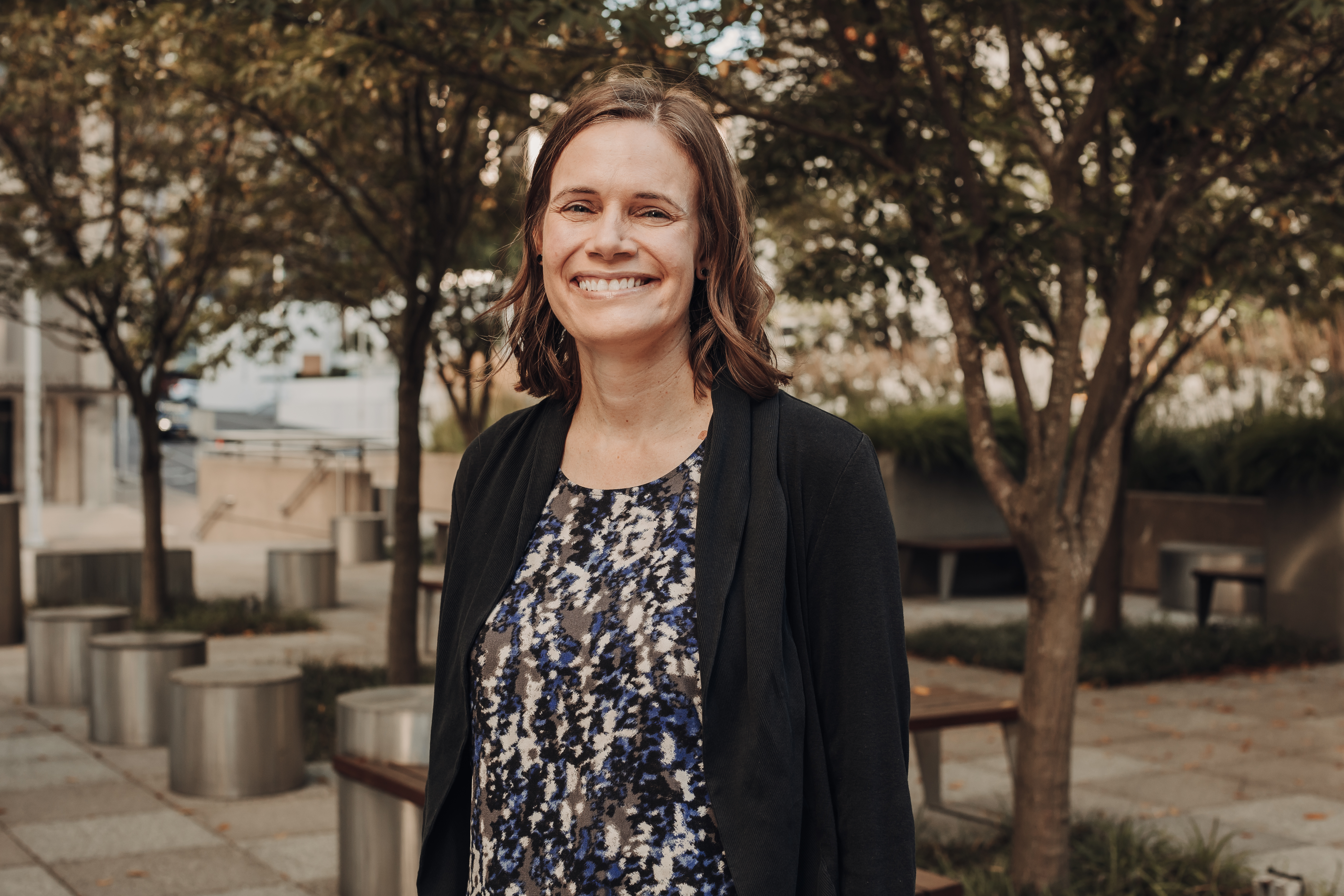
Dr. Alison Bays, MD, MPH&TM, is a board-certified academic rheumatologist and clinician educator. Her clinical focus is vasculitis - especially giant cell arteritis, where she co-founded a fast-track clinic model that speeds diagnosis for patients at risk of irreversible vision loss. She has spent more than a decade teaching rheumatology to fellows, residents, and students.
Her research spans giant cell arteritis and vascular ultrasound, health equity in rheumatology care, gout quality improvement, and translational work in lupus and rheumatoid arthritis. She created Rheumify to bring the same teaching she does in clinic - clear, current, and honest about how board questions actually work - to every rheumatology learner.
Education & Training
- BS, Biopsychology - University of California, Santa Barbara
- MD - Tulane University School of Medicine
- MPH&TM (Master of Public Health & Tropical Medicine) - Tulane University School of Public Health & Tropical Medicine
- Internal Medicine Residency - University of Washington, Seattle
- Rheumatology Fellowship - University of California, San Francisco (UCSF)
Board Certifications
- Internal Medicine (ABIM)
- Rheumatology (ABIM)
- RhMSUS - Musculoskeletal Ultrasound Certification in Rheumatology
Peer-Reviewed Publications
Spanning giant cell arteritis and vascular ultrasound, health services research, gout quality improvement, and translational immunology.
Evaluated whether simple CBC-derived ratios (like neutrophil-to-lymphocyte ratio) add diagnostic and prognostic value in a giant cell arteritis fast-track cohort.
Highlighted that a meaningful subset of giant cell arteritis patients present with normal ESR and CRP - a diagnostic blind spot that can delay sight-saving treatment.
A companion nationwide analysis describing emergency department utilization and outcomes among patients with psoriatic arthritis.
Analyzed the Nationwide Emergency Department Sample to characterize why patients with rheumatoid arthritis visit the ED and what happens when they do.
Found that interferons and cytokines can switch on L1 retrotransposon transcription in myeloid cells from autoimmune patients, suggesting a self-amplifying inflammatory loop.
Quantified real-world delays in starting tocilizumab for giant cell arteritis in the US, including the impact of insurance authorization on time to treatment.
Showed that dysregulated mRNA splicing in lupus neutrophils produces altered proteins and neoepitopes that may fuel autoantibody formation.
Identified clinical features associated with anterior ischemic optic neuropathy - the feared vision-threatening complication - in patients with giant cell arteritis.
Oshinsky C, Pollock PS, Sacksen I, Jernberg E, Zierler RE, Bays AM. The Common Carotid Artery in the Ultrasound Evaluation of Giant Cell Arteritis. J Clin Rheumatol. 2024;30(6):243-246.
Assessed the diagnostic contribution of common carotid artery imaging within a vascular ultrasound protocol for giant cell arteritis.
Mapped where L1 retrotransposon products and DNA sensors sit inside lupus granulocytes, refining the mechanism by which they may trigger interferon responses.
Laine A, Wang X, Ni K, et al., Bays A, Gale M Jr, Mustelin T. Expression of envelope protein encoded by endogenous retrovirus K102 in rheumatoid arthritis neutrophils. Microorganisms. 2023;11:1310.
Demonstrated expression of an endogenous retrovirus envelope protein in neutrophils from patients with rheumatoid arthritis, exploring a potential trigger of autoimmunity.
Translational work showing that L1 retrotransposons are expressed in granulocytes of patients with active lupus, supporting a possible role in driving interferon activation.
Degirmenci H, Oh J, Bays AM, et al. Public Interest in COVID-19 Therapeutics for High-Risk Populations During the Omicron Era: A Google Trends Analysis. Cureus. 2022;14(12):e32684.
Used Google Trends data to track how public interest in COVID-19 therapeutics for high-risk patients shifted during the Omicron era.
Evaluated whether adding subclavian artery imaging to the ultrasound protocol improves detection of giant cell arteritis.
Found that patients who prefer a language other than English used rheumatology telehealth significantly less during the pandemic, highlighting a health-equity gap in virtual care.
Described one of the first US fast-track clinic protocols using vascular sonographers for giant cell arteritis diagnosis. Recognized as a Top Cited Article for 2022-2023.
Chung SH, Wener M, Bays AM, et al. Correspondence on "SARS-CoV-2 vaccination in rituximab-treated patients" by Bonelli et al. Ann Rheum Dis. 2021.
Correspondence adding data on humoral and cellular vaccine responses in patients on rituximab during the COVID-19 pandemic.
Huang IJ, Bays AM, Liew JW. Frequency of allopurinol dose reduction in hospitalized patients with gout flares. J Rheumatol. 2020.
A letter examining how often allopurinol is inappropriately dose-reduced or stopped during hospitalizations for gout flares.
Ficenec SC, Percak J, Arguello S, Bays A, et al. Lassa Fever Induced Hearing Loss: The Neglected Disability of Hemorrhagic Fever. Int J Infect Dis. 2020.
Examined sensorineural hearing loss as an under-recognized long-term disability following Lassa fever infection.
Huang IJ, Liew JW, Morcos MB, Zuo S, Crawford C, Bays AM. Pharmacist-managed titration of urate-lowering therapy to streamline gout management. Rheumatol Int. 2019;39(9):1637-1641.
Showed that a pharmacist-run protocol for titrating urate-lowering therapy can streamline gout management and help more patients reach target uric acid levels.
Liew JW, Struthers SA, Cormack FC, Bays AM, Han BK. Spinal Tophi Causing Cord Compression and Mimicking Epidural Abscess in a Young Man with Lesch-Nyhan Variant. J Clin Rheumatol. 2018.
A case report of gouty tophi in the spine masquerading as an epidural abscess - a reminder that crystal disease can appear in unexpected, high-stakes locations.
Bays A, Wahl E, Daikh DI, Yazdany J, Schmajuk G. Implementation of disease activity measurement for rheumatoid arthritis patients in an academic rheumatology clinic. BMC Health Serv Res. 2016;16:384.
A quality-improvement study showing how routine, structured disease activity measurement can be successfully implemented for rheumatoid arthritis care in an academic clinic.
Bays AM, Engelberg RA, Back AL, et al. Interprofessional communication skills training for serious illness: evaluation of a small-group, simulated patient intervention. J Palliat Med. 2014;17(2):159-66.
Evaluated a simulated-patient training program for clinicians learning to lead difficult conversations in serious illness, showing the value of structured communication skills practice.
Bays AM, Pierson DJ. Tuberculous Pleural Effusion. Respir Care. 2012;57(10):1682-4.
A case report reviewing the presentation, diagnostic workup, and management of tuberculous pleural effusion.
Book Chapters & Invited Reviews
Bays A, Gardner G. New Therapies in Rheumatology. Med Clin North Am. 2024.
An updated review of the newest therapies in rheumatology and how they fit into modern treatment algorithms.
Reviewed the evidence and practical approach to treating primary CNS vasculitis, a rare and diagnostically challenging condition.
Huang I, Thomason JL, Bays AM. Rheumatological Diseases. In: Gonzalez-Fernandez M, Schaaf S, eds. Handbook of Physical Medicine and Rehabilitation. Demos Medical Publishing / Springer; 2022:401-408.
A practical overview of rheumatologic disease for physical medicine and rehabilitation clinicians.
Bays AM, Gardner G. Pharmacologic therapies for rheumatologic and autoimmune conditions. Med Clin North Am. 2016;100(4).
A comprehensive review of drug therapy across rheumatic and autoimmune diseases, written for the practicing internist.
Study With Dr. Bays
Every Rheumify question and flashcard is written and clinically reviewed by Dr. Bays - and updated as guidelines and trials change.
Try the Rheumify App →